
Advanced Anti-Money Laundering (AML) Compliance & Financial Crime Prevention Certification Program




- Description
Advanced Anti-Money Laundering (AML) Compliance & Financial Crime Prevention Certification Program
What Is Included
- Comprehensive Video & Text Lessons:
Covering the full advanced AML and financial crime curriculum
- Advanced AML Book PDF (207 Pages) | $99 standalone value
Anti-Money Laundering (AML): An Essential Guide to Financial Crime Prevention, Compliance, and Risk Management, included with the course
- AML Operational Resource Library (16 Downloadable Templates) | $99 standalone value
Includes essential compliance templates, working papers, declarations, checklists and decision tools covering CDD onboarding, UBO, PEP, SOF/SOW, sanctions screening, AML policy, SAR/STR escalation, goAML readiness, EWRA, inspection readiness, data governance, funds manipulation and insider threats; providing the essential tools to help you start implementing AML compliance immediately.
- Quizzes & Knowledge Assessments:
Module quizzes throughout the programme and final assessment.
- International Certification:
Accredited by the International Certification and Quality Assessment in Wellbeing UK (ICQAWUK)
Free Preview
Course Description
This comprehensive advanced programme provides an in-depth understanding of Anti-Money Laundering (AML), financial crime prevention, compliance and risk management, covering the complete AML lifecycle and the frameworks, controls and practices used to identify, assess, mitigate, monitor and report financial crime risks.
Participants will explore financial crime and money laundering, the global AML framework, FATF Recommendations, risk assessment, KYC, CDD and EDD, high-risk customers, sanctions and screening, transaction monitoring, investigations, suspicious activity reporting, AML governance, compliance programmes, sector-specific risks, AML technology and emerging financial crime threats.
The programme combines structured video and text-based learning with assessments and a comprehensive 200-page AML reference book, providing learners with both practical learning and a detailed resource for continued reference.
Learning Objectives
By completing this programme, learners will:
- Understand the nature and scope of financial crime, money laundering, terrorist financing and proliferation financing.
- Understand the global AML framework, FATF Recommendations and the Risk-Based Approach.
- Develop knowledge of AML risk assessment, including Enterprise-Wide Risk Assessment (EWRA) and customer risk assessment.
- Understand KYC, Customer Due Diligence (CDD), Simplified Due Diligence (SDD) and Enhanced Due Diligence (EDD).
- Understand Source of Funds, Source of Wealth, Ultimate Beneficial Ownership and complex legal structures.
- Recognise and assess high-risk customers, including PEPs, correspondent banking relationships and virtual asset customers.
- Understand sanctions regimes, screening processes, adverse media screening and sanctions evasion risks.
- Understand transaction monitoring, alert generation, investigation, case management and escalation procedures.
- Understand suspicious activity reporting, tipping off, record keeping and regulatory obligations.
- Understand the role of the MLRO, Compliance Officer, senior management and the Three Lines of Defence.
- Understand AML compliance programmes, policies, controls, monitoring, testing and independent audit.
- Recognise sector-specific financial crime risks across financial institutions, DNFBPs, FinTech, virtual assets, trade and other sectors.
- Understand the role of technology, eKYC, artificial intelligence, advanced analytics and transaction monitoring systems in AML.
- Identify common AML compliance failures and understand best-practice approaches to strengthening AML frameworks.
- Develop a comprehensive understanding of the end-to-end AML lifecycle.
Topics Covered
Financial Crime & Money Laundering
- What Is Financial Crime
- Money Laundering
- Stages of Money Laundering
- Predicate Crimes
- Money Laundering Techniques
- Terrorist Financing
- Proliferation Financing
- Sanctions Evasion
- Bribery & Corruption
- Tax Crimes
- Fraud
- Cyber-Enabled Financial Crime
- Consequences of Financial Crime
Global AML Framework
- Why AML Exists
- FATF and Global AML Architecture
- FATF Recommendations
- Mutual Evaluation Process
- High-Risk Jurisdictions
- International AML Bodies
- National Regulators
- AML Legal & Regulatory Frameworks
- Risk-Based Approach
AML Risk Assessment
- Understanding AML Risk
- Enterprise-Wide Risk Assessment (EWRA)
- Customer Risk
- Geographic Risk
- Product & Service Risk
- Delivery Channel Risk
- Industry & Sector Risk
- Inherent & Residual Risk
- Risk Appetite
- Risk Scoring & Methodology
KYC, CDD & EDD
- Customer Identification Programme (CIP)
- Customer Due Diligence (CDD)
- Simplified Due Diligence (SDD)
- Enhanced Due Diligence (EDD)
- Ongoing Due Diligence
- Customer Risk Profiling
- Source of Funds (SoF)
- Source of Wealth (SoW)
- Ultimate Beneficial Ownership (UBO)
- Legal Persons & Structures
- Trusts & Legal Arrangements
- Shell, Shelf & Front Companies
High-Risk Customers
- Politically Exposed Persons (PEPs)
- Relatives & Close Associates (RCAs)
- Correspondent Banking
- Offshore Financial Centres
- High-Risk Customer Typologies
- NGOs & Charities
- Virtual Asset Customers
- High-Risk Relationship Management
Sanctions & Screening
- Introduction to Sanctions
- Types of Sanctions
- Global Sanctions Regimes
- Sanctions Evasion Techniques
- Watchlists & Databases
- Customer Screening
- Payment Screening
- Batch Screening Systems
- PEP Screening
- Adverse Media Screening
- Screening Logic & Matching
- False Positives & False Negatives
- Screening Red Flags
Transaction Monitoring & Investigations
- Transaction Monitoring Fundamentals
- Rules-Based & Scenario-Based Monitoring
- Alert Generation
- Alert Triage & Review
- Investigation Process
- Case Management Systems
- Escalation Procedures
- Suspicious Activity Indicators
- Transaction Red Flags
- Common Monitoring Scenarios
Reporting & Regulatory Obligations
- Internal Escalation & Reporting
- Suspicious Activity Reports (SAR/STR)
- Tipping Off
- Record Keeping
- Regulatory Reporting Obligations
- Financial Intelligence Units (FIUs)
- Regulatory & Law Enforcement Requests
- Customer Exit & De-Risking
AML Compliance Programme & Governance
- AML Compliance Programme & Governance
- AML Policies & Procedures
- MLRO / Compliance Officer Responsibilities
- Training & Awareness
- Independent Audit
- AML Controls Framework
- Three Lines of Defence
- Compliance Monitoring & Testing
- Board & Senior Management Oversight
- Compliance Culture
Sector-Specific Risks
- Financial Institutions
- Banking Institutions
- Non-Bank Financial Institutions
- Capital Markets & Investment Services
- Payment & Money Movement Services
- Virtual Assets & FinTech
- Designated Non-Financial Businesses & Professions (DNFBPs)
- Trade-Based & Commercial Risk Sectors
- Non-Profit Organisations
AML Technology, Emerging Trends & Best Practices
- Technology in AML Compliance
- Digital Customer Identification & eKYC
- Screening & Monitoring Technologies
- Transaction Monitoring Systems
- Artificial Intelligence & Advanced Analytics
- Digital Assets & Emerging Financial Crime Risks
- Data Management, Governance & Privacy
- Evolving Financial Crime Methods
- Common AML Compliance Failures
- Best-Practice AML Framework
- End-to-End AML Lifecycle
Included: Advanced AML Book (PDF)
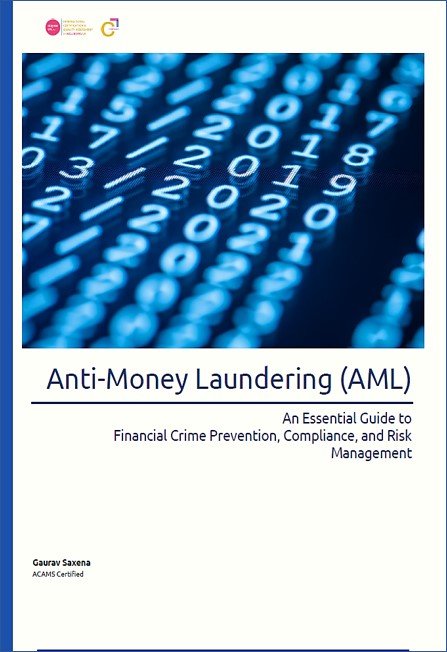
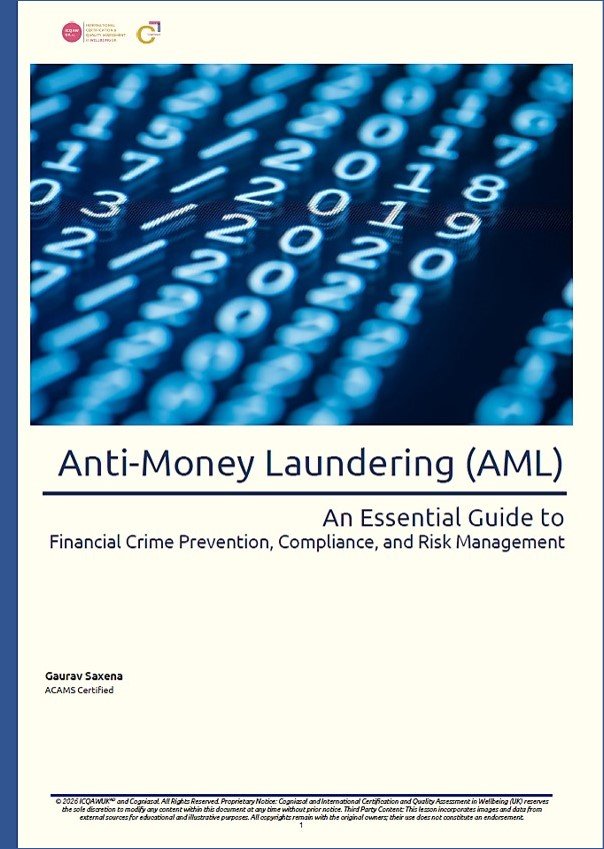
Anti-Money Laundering (AML): An Essential Guide to Financial Crime Prevention, Compliance, and Risk Management is included with the programme as a 207 page advanced reference book PDF.
The book provides a structured resource covering key AML and financial crime concepts, compliance frameworks, risk management, customer due diligence, sanctions, transaction monitoring, reporting and other essential areas of professional AML practice.
Included: AML Operational Resource Library
The programme includes a 16-document downloadable AML Operational Resource Library providing practical templates, working papers, declarations, checklists and decision tools to support AML compliance activities.
- Roles and Responsibilities Matrix
- SAR/STR Template
- Sanctions Screening Effectiveness Checklist
- UBO Declaration
- Source of Funds & Source of Wealth Declaration
- AML Policy Template
- CDD Onboarding Checklist Template
- Internal SAR/STR Escalation & MLRO Decision Form
- goAML Compliance Readiness Checklist
- PEP Declaration
- Data Governance Checklist
- Funds Manipulation Identification Checklist
- Enterprise-Wide AML/CFT Risk Assessment (EWRA) Template
- Risk-Based Decision-Making Flow Chart
- AML/CFT Inspection Readiness Checklist-UAE
- Insider Threat Risk & Control Checklist
Who Is This Programme For?
This programme is suitable for anyone looking to build a career in AML, financial crime, compliance or risk management, as well as professionals who want to enhance or expand their existing knowledge and expertise.
It is suitable for individuals entering the field, graduates, career changers, compliance and risk professionals, financial services professionals, managers, business owners and others seeking comprehensive knowledge of AML and financial crime prevention.
By completing this programme, learners will develop a comprehensive understanding of the AML lifecycle and the knowledge required to understand, assess and manage financial crime risks within professional and regulated environments.
Independent AML Resources
(Included in the advanced course, however can be bought independently without the course)
GET AML Advanced Book (207 pages)
GET AML Compliance Ready to Use Toolkit (16 Downloadable Templates)